Source Leather Travel Diary for School, Gift, and Promotion
Explore 30 verified options for a leather travel diary suitable for school, gifts, and promotional events. Buyers can compare spiral, loose leaf, and glue bound styles with customizable covers and varying page counts to find the ideal planner or organizer.
Key considerations
Products List




Comprehensive Sourcing Guide
Leather Travel Diary Sourcing Guide
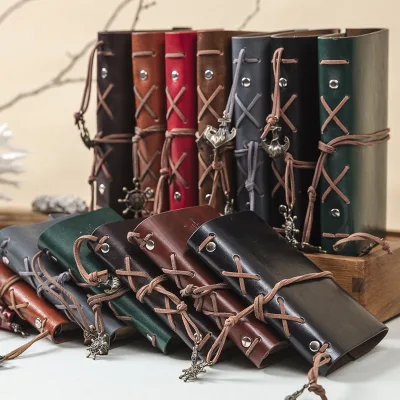
The leather travel diary market offers versatile solutions for corporate gifting, promotional campaigns, and educational institutions. Based on observed listings, these items frequently appear as custom planners or organizers with hardcover bindings, available in colors like red and black. Buyers should note that while some models feature spiral or loose-leaf bindings, others utilize glue-bound construction, requiring careful selection based on the intended user experience.
Procurement decisions must account for the diverse material compositions found in current listings, ranging from genuine leather to faux PU leather options. The observed product range includes specific models with varying page counts, typically between 80 and 120 sheets, and standard sizes such as A5 or A6. Sourcing strategies should prioritize suppliers who explicitly confirm customization capabilities for logos and covers, as this is a dominant feature across the majority of available inventory.
Product Scope and Observed Listing Signals
Buyers must distinguish between diary types that include functional locks and those designed without them, as this significantly impacts security and use case suitability. The observed data indicates a split between models with locks and those without, suggesting that procurement specifications should explicitly define this requirement to avoid mismatched expectations. Additionally, the presence of specific binding styles like spiral or loose-leaf versus traditional glue binding dictates the durability and flexibility of the final product.
The commercial listings reveal a wide spectrum of customization options, including debossed, embossed, silk screen, and hot stamp logo applications. While some products are listed with fixed standard sizes like A5, others offer fully customized dimensions, requiring buyers to verify if the supplier can accommodate specific design constraints. The observed price range and minimum order quantities vary considerably, necessitating a clear definition of budget and volume requirements before engaging with potential vendors.
Technical Specifications to Verify
Verification of paper quality is critical, as listings indicate options for cream or white paper types that affect readability and writing performance. Buyers should request physical samples to confirm the paper weight and texture, ensuring it meets the specific needs of the end-user, whether for heavy note-taking or light journaling. The observed page counts range from 80 to 120 sheets, but the actual sheet count per inch of thickness can vary, influencing the overall bulk and portability of the diary.
Binding integrity must be rigorously tested, as the market offers spiral, loose-leaf, and glue-bound options with different longevity profiles. For travel diaries intended for frequent use, the hardness of the cover, described as medium soft in some listings, should be evaluated to ensure it provides adequate protection without being too rigid. Additionally, the printing capabilities, ranging from single-color to full printing, must be confirmed to ensure the final design aligns with brand guidelines and visual expectations.
Compliance and Safety Documentation
While specific certification data is not universally present in the provided listings, buyers should demand proof of material safety for all leather and PU components used in the diary covers. This includes verifying that the materials comply with relevant regional regulations regarding hazardous substances, particularly for products intended for children or educational use. The absence of explicit certification claims in general descriptions means that due diligence is required to ensure the supplier adheres to international safety standards for consumer goods.
Documentation regarding the production process should also be reviewed to confirm adherence to labor and environmental standards, even if not explicitly stated in the product summary. Buyers should request a declaration of conformity from the supplier, ensuring that the manufacturing facilities operate under acceptable working conditions and environmental guidelines. This step is essential for maintaining brand reputation and ensuring that the sourced products do not carry hidden compliance risks that could lead to market rejection.
Cost Drivers and Commercial Terms
The final unit cost is heavily influenced by the level of customization, including the complexity of logo application and the choice of cover material. Listings show that options like embossed or hot-stamped logos may incur additional charges compared to standard silk screen printing, and the selection of genuine leather versus faux PU leather will significantly alter the price point. Buyers must clarify whether the quoted price includes all customization fees to avoid unexpected cost overruns during the production phase.
Commercial terms such as minimum order quantities and production lead times vary across different models, with some suppliers requiring 300 pieces while others may have different thresholds. The observed production times range from 10 to 20 working days, depending on the complexity of the order and the specific model selected. Shipping services, including DDP and DDU options, should be negotiated clearly to determine who bears the risk and cost of transit, ensuring that the total landed cost is accurately calculated.
Supplier Qualification and Quality Control
Establishing a robust quality control protocol is essential, as the observed product range includes diverse binding methods and material finishes that require consistent inspection. Buyers should implement a pre-production sample approval process to verify that the cover hardness, paper quality, and binding strength meet the agreed specifications before mass production begins. This step helps mitigate the risk of receiving substandard goods that do not match the initial sample or the buyer's expectations.
Supplier reliability should be assessed based on their ability to meet production timelines and handle customization requests efficiently. The observed data indicates that some suppliers offer free design services and sample availability, which can be valuable indicators of their commitment to customer support. However, buyers must verify the supplier's capacity to handle large orders without compromising quality, ensuring that the production line can maintain consistency across the entire batch.
Long-Term Procurement Checks
Building a sustainable supply chain requires regular audits of the supplier's ability to maintain consistent quality over multiple production cycles. Buyers should establish a schedule for periodic quality checks and performance reviews to ensure that the supplier continues to meet the required standards for materials, binding, and customization. This proactive approach helps identify any potential issues early and allows for corrective actions before they impact the overall supply chain efficiency.
Long-term partnerships should also include a review of the supplier's adaptability to changing market demands and design trends. As the leather travel diary market evolves, suppliers must demonstrate the flexibility to introduce new materials, sizes, or customization options to keep the product line competitive. Maintaining open communication and regular feedback loops with the supplier ensures that the procurement strategy remains aligned with the buyer's evolving business needs and market conditions.
FAQs
What customization options are available for leather travel diaries?
Customization is available on these leather travel diaries. Logos can be applied using debossed, embossed, silk screen, or hot stamp methods, and cover designs can be customized as well. Both OEM and ODM orders are welcome, with free design support supplied. Sample policies and specific customization terms are negotiable, so confirm details with the supplier before placing a bulk order.
What is the minimum order quantity for leather travel diaries?
The listed minimum order quantity is 300 pieces for these diary products. MOQ requirements can vary by model, and some listings in the category show ranges from 100 to 1000 pieces. If your first order is smaller than 300 pieces, discuss flexible terms with the supplier, since sample quantities and trial orders may be handled separately from production runs.
How long does production take for a custom leather travel diary order?
Production time is typically 10 working days for these diary models, while some leather notebook products list 20 working days. The timeframe depends on order quantity, customization complexity, and current factory schedules. Confirm the exact lead time before ordering, especially for large or heavily customized runs, and ask whether sample production is included in the quoted timeline.
What materials are used for the covers and inner pages?
Covers are made of leather or PU, including faux PU leather with customized material options. Inner pages contain 80 to 120 sheets printed with horizontal lines, using cream or white paper. Some models feature hardcover construction with spiral, loose leaf, or glue bound binding. Ask the supplier to confirm the exact material combination for the specific model you plan to order.
Can I get a sample before placing a bulk order?
Yes, samples are available and free samples are offered, with customized sample terms negotiable. This lets you check cover material, binding, paper quality, and logo workmanship before committing to production. Customized samples usually cost more than stock samples because they involve tooling and setup. Agree on sample fees, shipping costs, and lead time with the supplier in advance.
What sizes are these leather travel diaries available in?
The standard size listed is A5, with some models offered in A6 or customized sizes. Size selection matters for travel use, since A6 fits pockets and bags more easily while A5 offers more writing space. Customized sizes are supported under OEM and ODM arrangements. Confirm the dimensions, page count, and thickness for the specific model before finalizing your order.
What printing options are supported for custom branding?
Printing options include one color, two color, or full printing, and logos can also be debossed, embossed, silk screen printed, or hot stamped. Cover designs accept customization, and free design services are supplied to help prepare artwork. Provide print-ready files and specify placement and color requirements early, since method choice affects cost, durability, and overall production time.
How are leather travel diaries packed for shipping?
Packing varies by model. Some products are packed one piece per OPP bag with 40 pieces per carton, while others use one piece per OPP bag, 25 pieces per inner box, and 50 pieces per carton. Carton packing is also used. DDP and DDU shipping services are available, so confirm the packing configuration and shipping terms that suit your destination and distribution needs.